How easily you can find your way around a place can impact your enjoyment, visit and perception.
But helping people find a town or city’s attractions, shops, leisure offer and amenities can sometimes be an overlooked part of places. It becomes even more important when areas of interest aren’t all in one compact area.
Newcastle and Tyneside
In the North East, which The Assembly Line founder Diane Cunningham visited recently, there were examples of how it can be done well and areas for improvement.
Public transport across the region is well-integrated, making it easy for those without a car to get around and Metro maps are clear. Plans are developing to introduce contactless payments, but currently, it’s cash only, which can be frustrating for both locals and visitors
Arriving in Newcastle, the city centre is well signposted with Central Station and Quayside signposted from everywhere, but the minute you move beyond that, signage becomes scant.
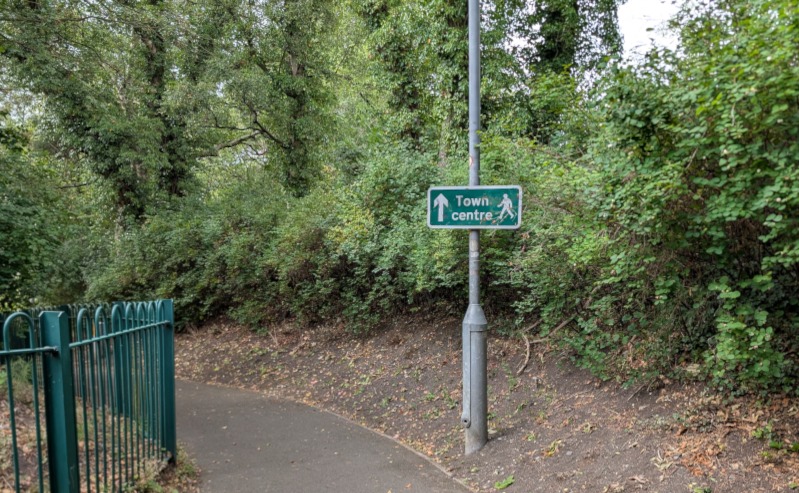
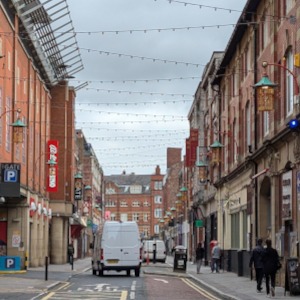
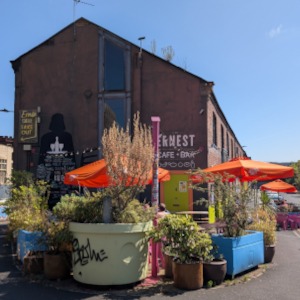
Areas such as Chinatown have little to point the way, and there is nothing to help you find the creative quarter at Ouseburn. There is only limited signage directing you back to the town centre.
Chinatown with an arch at one end but no signage
Approaching Ouseburn from city centre
If people are specifically looking for these areas, then there are, of course, mobiles to help point the way. But a lack of physical signing hinders general discovery and misses an opportunity to build a sense of place and connectivity and encourage wandering.
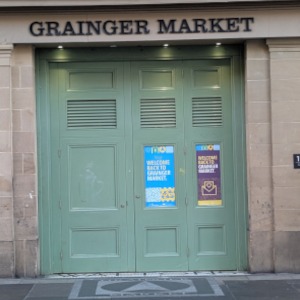
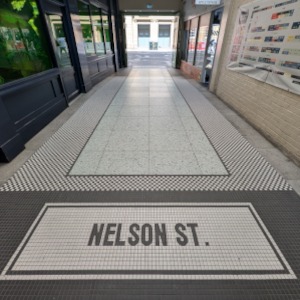
In the city’s famous Grainger Market, wayfinding is hindered by 18 entry doors, making it easy to use the market hall as a cut through, but not so easy to meet people or find favourite stalls.
Work is underway to improve this and early changes include signage built into the tiles at entrances, future works will see entry doors numbered and aisle numbering reinstated.
One of the markets many entrances
Restoring the original flooring to support wayfinding
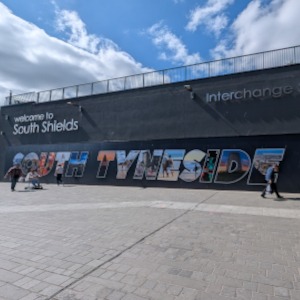
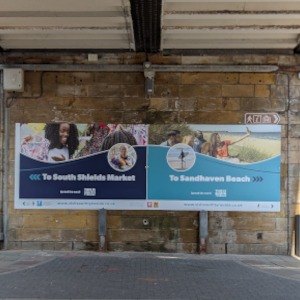
South Shields is an example of how wayfinding can be done well and support the sense of place.
There are murals with directions, signage, sculptures and artwork marking routes, including sculptures and installations at the beach.
As well as generating a strong sense of place from arrival on the Metro along to the beach one way and Market Square the other.
A clear sense of where you are in South Shields
Signage to attractions
In contrast, North Shields’ wayfinding is poor. Stepping off the ferry, there is next to nothing to point the way to the town centre, Metro or the emerging Fish Quay.
It’s a town with two key neighbourhoods, but little to connect them other than a steep walk. It’s lovely to discover the town, but a very different experience to South Shields, where you are being led to the sea and other points of interest.
North Shields had no sense of there being much of interest, and yet there are plenty of reasons to visit.
In visiting new places, it’s nice to wander around without being glued to a mobile and there isn’t always good network coverage.
Providing visible, readable signage to key locations – in a shopping centre, a market and across a town centre – can lead to new discoveries.
Where have you been that was easy to navigate or was there a place you got lost in yet it was a good experience?
Where could wayfinding being improved?
What might people be missing when they visit your place?
This website uses cookies to improve your experience. We'll assume you're ok with this, but you can opt-out if you wish. Cookie settingsACCEPT
Privacy & Cookies Policy
Privacy Overview
This website uses cookies to improve your experience while you navigate through the website. Out of these cookies, the cookies that are categorized as necessary are stored on your browser as they are essential for the working of basic functionalities of the website. We also use third-party cookies that help us analyze and understand how you use this website. These cookies will be stored in your browser only with your consent. You also have the option to opt-out of these cookies. But opting out of some of these cookies may have an effect on your browsing experience.
Necessary cookies are absolutely essential for the website to function properly. This category only includes cookies that ensures basic functionalities and security features of the website. These cookies do not store any personal information.
Any cookies that may not be particularly necessary for the website to function and is used specifically to collect user personal data via analytics, ads, other embedded contents are termed as non-necessary cookies. It is mandatory to procure user consent prior to running these cookies on your website.