



22 May Streets for people: What Vienna does well
As the UK government’s plans for a High Streets Strategy progress, The Assembly Line Founder Diane Cunningham reflects on a recent trip to Vienna, what the city is doing well, and what UK neighbourhoods could replicate.
Public realm: Greening and free-to-use spaces
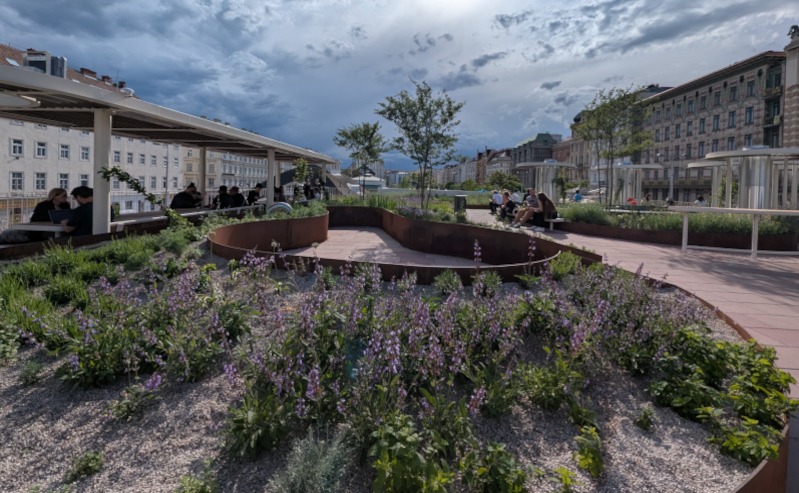
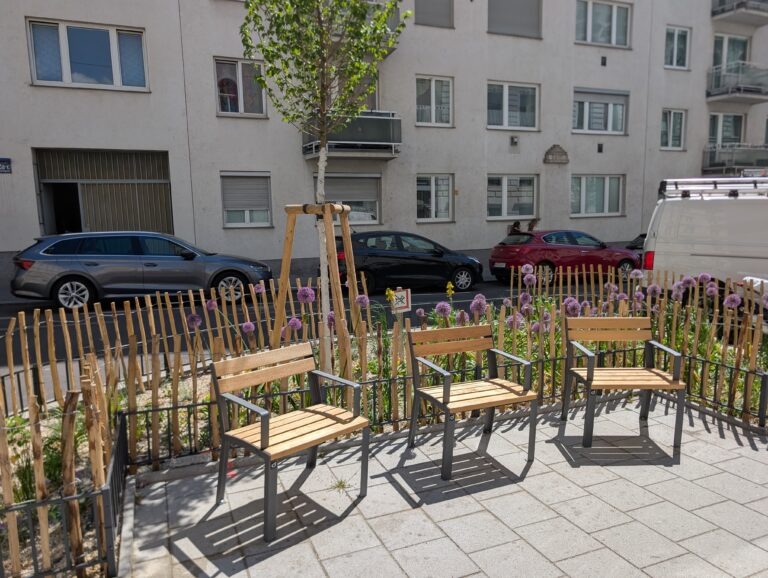
The first thing you notice when visiting Vienna is greenery has been added to the public realm and streetscapes across the city – there are flowers and trees everywhere, often with benches next to them.
These parklets felt like a real push to deliver urban greening and create natural spaces where people can sit outside. It creates a calmer, more pleasant environment and means people can just sit or chat without having to spend any money.
Even the roof garden above the market had no signage stopping non-customers from visiting.
I think we often lose sight of where the free spaces are, of where you can simply hang out without having to buy something. In the UK this is frequently mentioned by young people who are often greatly impacted by the loss of free spaces.
There are examples across the UK, particularly in London, but there is an opportunity to create more of these types of spaces and increase dwell time and social connections.
Clean Streets
Alongside the greenery, the cleanliness of the streets added to the visible care for the city. The pavements were spotless – no stains where people have thrown a can of Coke on the ground, for example.
And there was little litter or cigarette butts despite being a city where a lot of people are visibly smoking.
It makes the streets more pleasant and welcoming, and you want to spend more time outside.
I didn’t see any street cleaners, so what is the secret of Vienna’s success with this?
Is it a local sense of pride? If it’s clean already people want to keep it that way?
How can we replicate this in the UK where local authorities and BIDs are challenged to keep streets clean across the day?
People-first streets: Cycling, walking and integrated transport
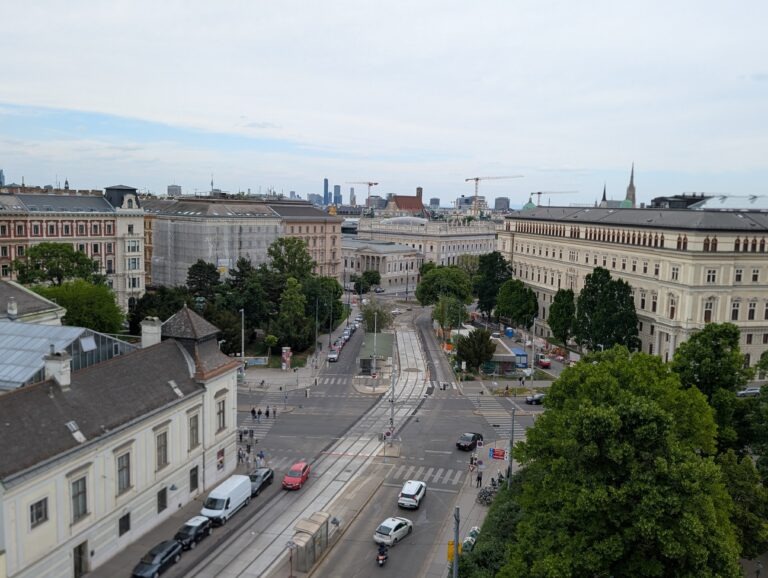
Cycling is really popular in Vienna, and the streets are designed to support cyclists. In the majority of the streets I walked down, there were properly segregated, wide cycle lanes.
It also has a fully functioning Metro, which is integrated with other public transport. For example, you can buy a ticket, and it’s valid for 80 minutes across every mode of transport; something that most UK cities outside London are still struggling to implement.
Cars do exist in the city, but everybody is parked obediently in bays meaning there’s more space for prams and wheelchairs on the pavement. There is less competition for space.
It all adds to a sense of pride and a more shared sense of ownership of spaces.
Makers, repairs and the second-hand economy
The high streets of Vienna are noticeable for the number of non-traditional retail.
Mixed in among the traditional retail, restaurants and cafes are makers’ workshops, such as leatherwork, tailoring and dresses. You can walk by a window and watch someone working on a partially made bridal gown or leather goods, for example.
It might not have been a shop you could walk into and buy something, but you could see the skills on display. It brings activity to the street.
The makers workshops sit alongside places to get items repaired, second-hand shops, textile banks and recycling points. Vienna has a visible culture of reuse; the circular economy is part of everyday high street life.
While we have second-hand shops here in the UK, we don’t see much being made on the high street, those skills are often invisible.
Is it because it’s cost-prohibitive, or is there an opportunity to bring more variety to high streets?
Thinking differently about anchors
Traditionally, you would associate anchors (the key store/other facility that pulls in people) with retailers such as M&S or, at a local level, a health centre or job centre. However, the type of offer that can act as an anchor can be much broader.
Café GOTA in the fifteenth district is an example. It doesn’t sell the cheapest cup of coffee and isn’t located in a central neighbourhood.
And yet, it has obviously become very popular. Given the number of people with dogs, it perhaps acts as a stopping off point on the way to and from the park.
But its popularity also extends beyond locals, as it’s become a destination for tourists having won numerous awards for its coffee. It is so popular that I was asked if I had a reservation.
If people are going to the area for the café, they are quite likely to pop into other stores or do something else in the area, rather than turn up and move on again.
A high street anchor such as this is a route to get people into an area and shows that you can think differently about anchors.
UK placemaking lessons from Vienna
- Often parklets are near cafes which is brilliant for business owners but can smaller versions be added too? Seating where you don’t feel you have to buy something to sit there and that encourages social interaction.
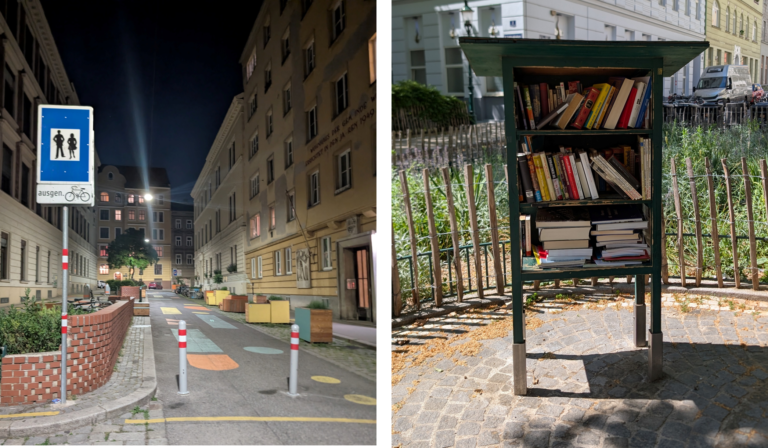
- Small things like chalked out areas give permission to play without traditional play equipment. This happens in London but it’s often a formalised Play Street.
- How can we build pride and give people a greater sense of ownership of their neighbourhood? On a recent walkabout with a local authority waste team, we looked at flytipping, cigarette butts in areas waiting to be planted and bin sacks on the pavement. What can we learn from other places that seem to manage their waste better? And, how can we change behaviour to encourage people to care more about their place?
- Cycling improvements need to be part of a bigger picture around movement. With Vienna’s truly segregated cycle lanes it made cycling appealing and looked safe but their streets are wide enough to accommodate options the UK does not have the space for. But, we can enforce on pavement parking and blocking bus lanes and other smaller issues that slow journeys and make it more difficult to get around.
- When the Old High Street was developing in Folkestone, businesses taking space had to have visible activity, even if they didn’t sell anything to the public. This activity is important for making places look active across all times of day and we perhaps don’t consider what happens when the shutters come down on most high streets. Where is the activity still taking place and can it be more visible?
- What’s your anchor – it doesn’t have to be a shop? What’s happening in your place that might generate interest? Can pop-up spaces or markets serve as an anchor? Can events play a part. The weekend I left there was a run happening and Eurovision but much smaller events can create a pull too.
This is our May newsletter where we discuss things we have seen and lessons learnt monthly.
Sign up to The Assembly Line newsletter for urban and place shaping observations.