



19 Aug Seasonal shift: Revitalising seaside towns
Seaside or coastal towns have been on the agenda in recent weeks with events such as the Seaside Heritage Symposium highlighting the challenges and opportunities. Here, The Assembly Line founder Diane Cunningham shares some of the conversations and her thoughts.
Coastal Town or Seaside Town?
The first challenge highlighted, she says, is what to call places – coastal or seaside? Not all coastal places have a seaside, for example Portsmouth, and it makes the narrative around seaside towns a little confusing. ‘Coastal’ feels like a broader label that could open up the conversation.
It is clear the overall narrative around seaside towns needs to change. There is still too much focus on deprivation and depression, as there is with the high streets, and the perception needs to be updated.
Seaside towns are often starting on the back foot and have to convince people they are worth investing in, visiting or a good place to start a business.
However, it’s hard to ignore that in many coastal towns education and employment are more challenging than in bigger towns away from the coast.
Successive governments haven’t thought about what they want from coastal towns. What’s their role in the UK? Can they offer more than nostalgia?
New Prime Minister Andy Burnham wants power locally, saying in his first speech: “We will take power out of here (Westminster) and carry it into every postcode in the land so that they can do more”.
We don’t yet know what this means for the smaller places like coastal towns, but, with more attention, hopefully the narrative will change to one of opportunity and the message that they aren’t a lost cause.
Investment in heritage assets
Seaside towns often have a lot of heritage and that is something worth investing in. It can be brought back to life with housing, community or cultural spaces (among other uses).
The Architectural Heritage Fund (AHF) focuses on social infrastructure such as housing, community and arts spaces which has a positive impact. Good examples include Saltdean Lido and Ramsgate where a Heritage Development Trust has been set-up/established.
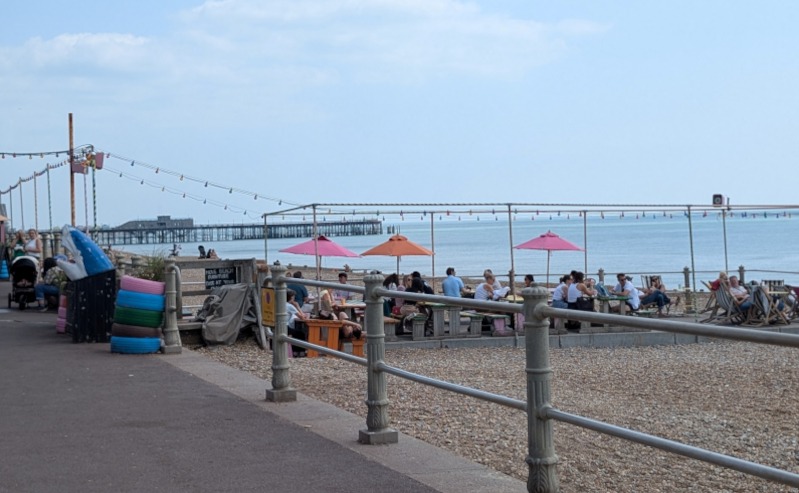
Revitalising heritage assets is not plain sailing. Hastings Pier is an example of boom and bust. It was community-owned and won the Stirling Prize but then struggled financially. A new owner stepped in and didn’t share community values.
It is a similar story to the high street, where unengaged building owners or owners with different priorities can hold places back.
Getting the business plan right, one that is rooted in commercial reality and financially sustainable, is crucial if seaside heritage buildings are to succeed.
Heritage assets have to be viable in the 21st century, not just exist in the past. Any plan needs a long-term view – more than 5 years.
The Haven Community Hub in Southend is a Charitable Incorporated Organisation (CIO) and a good example of the charity sector bringing uses back to heritage assets.
It’s a Grade II listed former department store which is now run by Southend Age Concern and offers a mix of free and paid-for activities, services and support.
Some 4,000 people visit every month, increasing footfall in the town.
The reinvention and reimagination of heritage assets can often help define a place because of their character and connection to a town’s past. They can support a strong sense of place and build pride.
A number of places were highlighted:
Saltdean Lido restoration
The Grade II listed Saltdean Lido is run by a charitable trust (CIC) on a 60-year lease.
It now houses a youth club, gym and restaurant/function room alongside the outdoor swimming pool.
Campaigns to save the Lido led to fundraising and skilled people bought into the plans. 100 volunteers painted the building and did the gardening and other work free of charge.
The pool doesn’t make money, but costs are subsidised by hiring out the venue for weddings and functions. This offsetting, not expecting income to come from every aspect of a building, is crucial and a key part of business planning often overlooked.
Saltdean Lido shows that there is no point in restoring buildings without changing their use and having a solid business plan to make them financially sustainable.
Heritage Lab Ramsgate
A CIC was set up to unlock the social and economic value of heritage assets in Ramsgate.
Founded in 2018, Ramsgate is one of the 19 Heritage Development Trusts in the UK and works to revive buildings, creating workspace, community space and employment.
The CIC has unlocked grants to bridge the gap between idea and commercial viability.
Funding has come from AHF and more recently Historic England.
It shows that heritage creates value when it creates jobs, people use it, and the building has a new use.
Takeaways
- Ask for help as people are often more willing to donate their time or money than you might expect.
- A plan needs a commercial reality attached to it. It’s not enough to have a whimsical idea about being on the coast; a business/building needs to function year-round and generate an income.
- There is funding out there from heritage/restoration to Lottery and local funds. Find the one that will work best for your project.
- Use the past to shape the future. Heritage assets tell a story that can be used to shape what is next.
- Place marketing has never been more accessible. If statutory bodies aren’t or can’t do this, the community can likely step in.
This is our August newsletter where we discuss things we have seen and lessons learnt monthly.
Sign up to The Assembly Line newsletter for urban and place shaping observations.