



29 Sep High street renewal: You don’t have to wait for funding
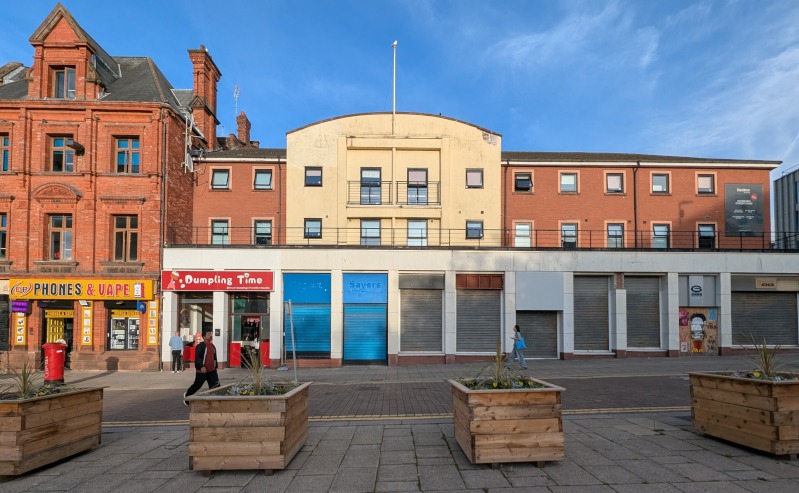
In the lead-up to the budget in October and the preparation of a national high streets strategy, the conversation about high street/town centre renewal seems focused on funding and what will come from the UK government.
Already announced is a £210m fund primarily aimed at bringing vacant and abandoned buildings back into use.
How many high streets will benefit from this money and any other funding announced remains to be seen, with no guarantee of a successful application.
But rather than playing a game of wait and see, there is plenty that places can do in the meantime.
It’s a topic close to The Assembly Line founder Diane Cunningham’s heart, and here she’s compiled some ways to get things moving before government funding lands or even without.
Make the most of private sector investment and vision
Are there private sector partners who are in a position to invest and support a place?
While Section 106 and other developer contributions are well established, a quicker, simpler approach is where a private owner/investor can develop their land/building to kickstart change
A good example is Wellington Yard in Liverpool. It’s a former light industrial site which is transforming into maker spaces and public-facing businesses, creating a destination, which they hope will have a ripple effect on improving the high street.
Targeted activation
Look for easier wins by building on existing pockets of footfall and functional businesses instead of trying to activate an entire street at once or focusing on the most challenging areas.
Is there a market or regular event taking place – what can be added to it in terms of local promotion, increased offers etc which might then grow?
Again, it’s an opportunity to create a ripple effect, in small steps rather than big bang change even if it’s one day a week or over a weekend – it doesn’t have to be seven days from the off.
Cross-sector partnerships
High streets have a variety of stakeholders and networks from community and charity groups to local authorities, businesses and even academic institutions.
Harness that collective power by bringing everyone together to share insights and collaboratively tackle issues. You are likely to find that the same interests and concerns cut across all stakeholder groups, albeit in a different way.
It also doesn’t mean creating a formalised structure like a BID, it can be an informal trader or resident group which becomes more formal as more people get involved or funding is identified in the future.
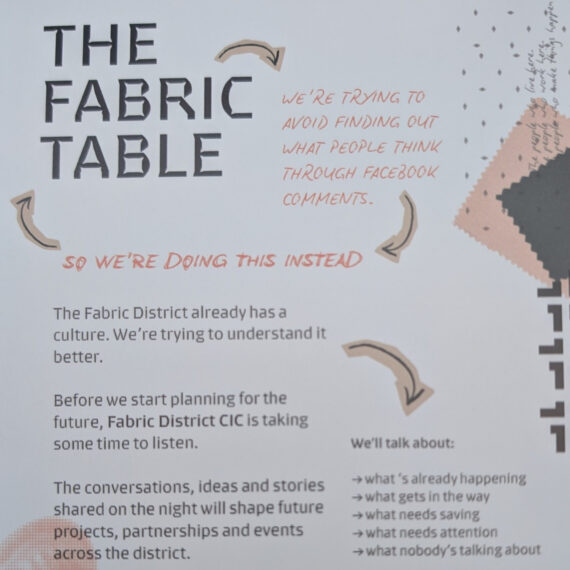
For example, The Fabric District CIC in Liverpool has representatives from the local authority attend their board as well as members from the universities who are a key component of the area. They also invite developers planning schemes in the area to present at meetings and build relationships with them.
Neighbourhood Threads: Connecting the Fabric District (right)
Empower local communities
In recent years, people have built stronger connections with their area, which is something that can be harnessed.
Move away from centralised, top-down models by providing greater support for grassroots groups and local communities to drive plans forward.
But, communities also need easier access to low-cost ways to make quick changes. For example, social media is a huge driver in gaining a following, raising profile and building partnerships when it’s done well.
And don’t forget the analogue options – InStreatham BID in London has a physical noticeboard on the high street with access provided to local organisations. In some places local print media exists, and leaflet drops (bear in mind cost of print and environmental concerns) can be successful.
Use data to shift from top-down to bottom-up approaches
There are now a few different platforms that track footfall, spend etc – find out locally who has access and see if they can provide the data. By knowing when places are busy, what the attractors are and what people leave the area for, empty units can be more effectively marketed to target occupiers.
There’s still a need to build relationships with commercial agents too.
Mechanisms such as high street rental auctions can make it easier for communities and owners to bring vacant buildings back into active use quickly.
Be realistic about ambitions
Accept that high streets cannot simply be transported back to the heady days of bustling department stores, greengrocers and bakeries.
Instead, it’s important to be realistic about what each individual place actually needs and can support, and how that might be delivered.
You don’t need to wait for retailers to leave or funding programmes to be announced.
There are plenty of ways to start making a difference now.
This is our September newsletter where we discuss things we have seen and lessons learnt monthly.
Sign up to The Assembly Line newsletter for urban and place shaping observations.