



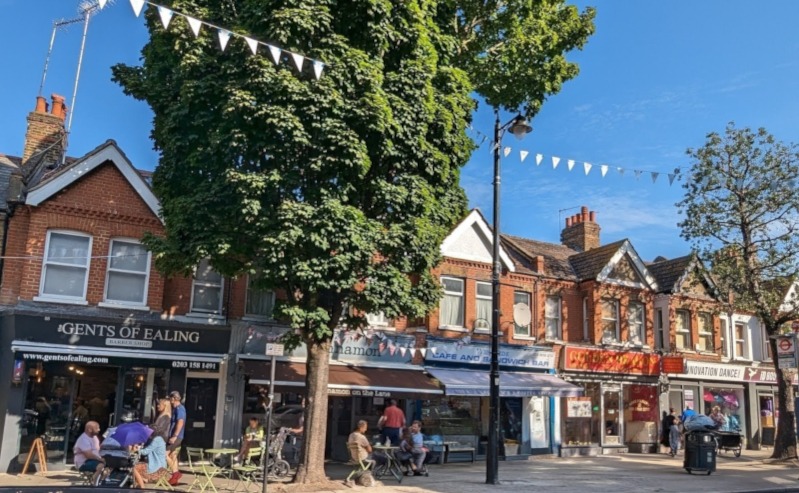
28 Apr High street renewal: Partnerships are key to building successful places
Despite the rhetoric about failing high streets, there are places where good work is being done despite challenging conditions. The key to success lies in how partners are brought together, and the high street is managed.
Last week, our director Diane, was back in Westminster as part of a series on Boosting Britain’s High Streets developed by the Policy Liaison Group on Housing Delivery & Growth.
This second event was chaired by Southport MP, Patrick Hurley
Diane’s first piece looked at what places could be getting on with rather than waiting for funding (download here)
This second piece (download here) showcases partnership models focusing on two different, but not dissimilar places in London and Liverpool.
Streatham – a formalised partnership to support a functional high street
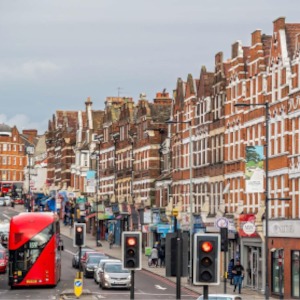
Streatham High Road holds the title of Europe’s longest continuous high street. It has a mix of leisure uses, independents and chains.
While it retains some art deco grandeur from its past, it is essentially a busy, often congested arterial route through south London. Despite this, vacancy rates are low.
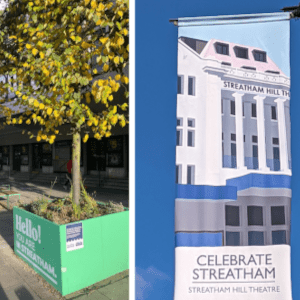
A Business Improvement District (BID) (InStreatham) was formed in 2013 with the aim of making Streatham a more pleasant place to spend time, encourage people to stop off rather than pass through and build its identity.
The BID provides a formalised, private sector-led approach to improving the high street and is part of a complex mix of stakeholders from TfL, Lambeth Council and the Met Police to community groups.
How the BID shapes change
It has a clearly defined operating agreement with the council, so it’s clear who does what.
TfL add a layer of complexity to work in Streatham. As manager of the road network, permissions must be sought for lighting, parklets and temporary installations.
The focus is on building relationships between the high street, its residents, businesses and amenity providers, creating a sense of pride and loyalty.
Social media and communications help levy payers understand what they pay for and highlight the street to residents.
The BID levy covers much of the work carried out but grants and funding are still needed.
It acts as the translator across organisational cultures and as a delivery partner for the council.
Wavertree – Community, private and public sector working together to drive change
Wavertree is a mix of affluence and deprivation, which puts it outside the criteria for most government or local authority funding. It has a high vacancy rate.
Despite this, a partnership of community groups and the public and private sectors has been driving change.
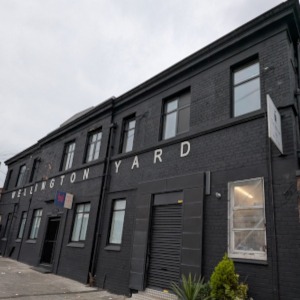
This includes Liverpool City Council, the Combined Authority, universities, Wellington Yard, Love Wavertree CIC, and others.
What Wavertree is doing well
Footfall is concentrated at either end of the high street, so the focus is on building on those locations rather than activating the whole street.
At one end is the former town hall, now a restaurant and event space and functional businesses such as a chemist and a Tesco Express.
At the other end is the Grade II-listed Wavertree Library and the emerging Wellington Yard, a privately owned small industrial park with a focus on makers spaces.
To help attract people to the High Street, 30% of Wellington Yard’s tenants have a public-facing offer. The owner targets young businesses and people who can invest in growing them, with the aim that it will have a ripple effect on the High Street and diversify the offer. Wellington Yard is growing fast and has quickly become a popular destination.
Wavertree received support from the government’s High Street Task Force between 2022 and 2024, which was a catalyst for forming the Wavertree High Street Task Force. The group is formed of residents, community organisations, the ward councillor and council officers.
Wellington Yard is part of the Task Force, and the aim is to get more businesses involved to balance community and commercial activities.
Love Wavertree CIC has been instrumental and is working with residents, the council and the highways team on the High Street Task Force recommendations, including road improvements.
While Wellington Yard is an example of the private sector having a vision and the investment to make something happen and hoping that this will be a collective effort.
Changes at Liverpool City Council have also had an impact. The council changed to a Neighbourhood Model in 2023/24 with the city now split into 13 regions, each with a neighbourhood manager.
The hyper-local model sees the council’s Neighbourhood Manager chairing Wavertree’s Task Force. This allows for quicker escalation routes on local issues and more opportunities for collaborative working.
It means a single approach for all partners to provide insight and has led to high levels of business and community engagement in addressing issues such as anti-social behaviour and health issues.
There is still a need to get more businesses involved to balance community and commercial activities and for more understanding between the public and private sector to manage expectations around the pace of change.
There is still much to do in Wavertree, and it’s not a perfect set-up, but it is moving towards a more coherent driving force.

Tips for successful partnerships
- Have shared objectives and be clear about key partners’ roles.
- Maintain relationships – it takes longer to start the conversation again than keep it going.
- Get private sector partners on board, but make sure values are aligned.
- Local authorities need to accept that they can’t always act quickly enough
- People don’t see borders, so partnerships need to stretch beyond boundary lines to deliver effective change.
- One change cannot transform a high street, for example, more police do not make for a safer town centre; it requires a multi-partner approach.
This is our April newsletter where we discuss things we have seen and lessons learnt monthly.
Sign up to The Assembly Line newsletter for urban and place shaping observations.