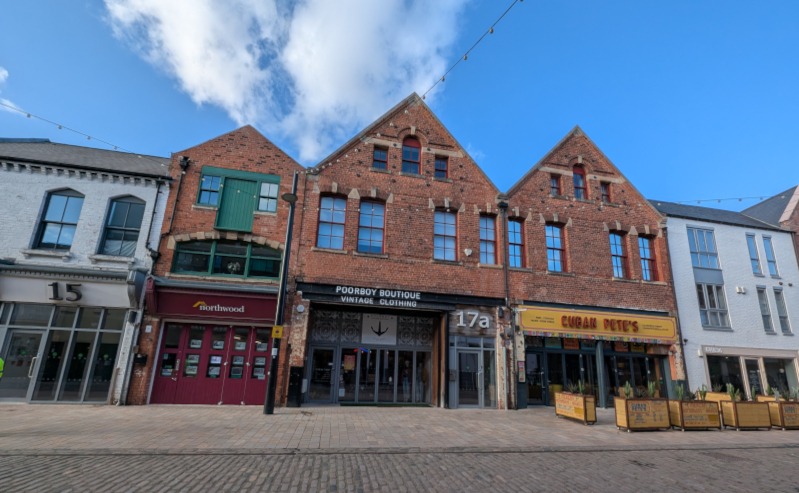
As it heads towards the 10-year anniversary from its year as City of Culture (2017), The Heritage Network took a look at what was happening.
With a title of “Transforming a ‘crap town’ through heritage-led regeneration”, our founder Diane Cunningham joined them to explore the city and find out more about the approach key stakeholders are taking to create the City of Culture legacy.
A return to Hull
Diane was last in Hull in 2017 when she visited for a weekend to experience the City of Culture which was in full swing.
There was a warm welcome and lots of activity from flashmobs to live music in historic courtyards and a fledgling Trinity Market.
Returning all these years later showed mixed fortunes – retail, like everywhere has reduced and weekday evenings are quiet but changes were underway – adapting Princes Quay shopping centre, adding resi to the former shopping street of Whitefriargate – while celebrating its historic buildings and maritime history.
Hull Maritime is everywhere across the city being the place brand and representing its history. It includes six key buildings, three historic streets and two ships and celebrates 800 years of maritime history.
The impact of City of Culture
Hull’s year in the spotlight was thought to be the first time local people had become boastful about their city. They saw a different image of their city from outside looking in, rather than the more regular positioning that Hull is the end of the line.
The National Geographic listing boosted local pride further, nearly 10 years later.
However, it was emphasised that authenticity is important in delivering change – as it is in many successful places – in repurposing and restoring buildings and what happens in them.
Key partners
National Heritage Lottery Fund and Hull City Council are the main funders
Historic England is subsidising the development of the Hepworth Arcade for small businesses on the upper floors
60k people were engaged over 5yrs on the proposed changes to the city centre
Infrastructure changes
The A63 dual carriageway separates the (regenerated area of) the Fruit Market (and marina) from the rest of the city centre. Rather than a regular crossing, a striking pedestrian bridge was added to entice people to use it and explore the other side of the road. Equally, people visited The Deep (an award winning aquarium) but didn’t head into the city centre – there wasn’t a clear route to send them there. Queen’s Dock (now Queen’s Gardens) was once one of the largest docks in the country but taken for granted. It is now being restored. When opened, it will connect the Maritime Museum and the North End Shipyard, two of the six projects underway.
Tips for other places
Building owners are the problem, not the buildings (so why restore the buildings?)
Focus on quick wins while longer changes are taking place
Celebrate the history and what there is now, don’t take them for granted
Think about it…is another shopping centre really needed? The creation of St Stephen’s (shopping and leisure centre) in 2017 created a lot of movement among big name retailers and changed the role of Whitefriargate.
Housing in city/town centres is vital to add footfall.
What next for Hull
2026 city wide celebration of City of Culture – culture and community led – into 2027 and all under brand @MartimeHull
New housing will complete this year in Fruit Market
Once projects complete, Hull’s visitor offer will have grown from a day trip to a weekend destination
The Maritime Museum will be 50% bigger when it reopens
We highly recommend a weekend visit to Hull this year and beyond from both a place perspective and for tourism.
If you need help in repurposing buildings and activating town centres, get in touch.
For more articles like this, sign up to The Assembly Line newsletter for urban and place shaping observations on LinkedIn.
This website uses cookies to improve your experience. We'll assume you're ok with this, but you can opt-out if you wish. Cookie settingsACCEPT
Privacy & Cookies Policy
Privacy Overview
This website uses cookies to improve your experience while you navigate through the website. Out of these cookies, the cookies that are categorized as necessary are stored on your browser as they are essential for the working of basic functionalities of the website. We also use third-party cookies that help us analyze and understand how you use this website. These cookies will be stored in your browser only with your consent. You also have the option to opt-out of these cookies. But opting out of some of these cookies may have an effect on your browsing experience.
Necessary cookies are absolutely essential for the website to function properly. This category only includes cookies that ensures basic functionalities and security features of the website. These cookies do not store any personal information.
Any cookies that may not be particularly necessary for the website to function and is used specifically to collect user personal data via analytics, ads, other embedded contents are termed as non-necessary cookies. It is mandatory to procure user consent prior to running these cookies on your website.